
Three fixing methods, one shelf edge, and a decision that’s easy to get wrong if nobody checks the shelving first. Adhesive, clip-on and magnetic data strips all do the same basic job: they hold a price ticket, barcode or promotional label along the edge of a shelf. What separates them is how they attach, and that decision affects a rollout more than most spec sheets give it credit for. Get the fixing method wrong on a multi-store order and you’re not looking at a minor inconvenience. You’re looking at strips that won’t stay put, or won’t fit the shelving they were sent to.
This guide sets out how to specify the right one, shelving type by shelving type, use case by use case.
What Are Shelf Edge Data Strips, and Why Does the Fixing Method Matter?
A data strip is a plastic profile fixed along the front edge of a retail shelf. It holds a printed ticket, barcode or promotional insert behind a clear window, keeping pricing and product information visible without covering the products themselves.
Most specification guidance focuses on size and material: strip height, ticket depth, PVC versus PET. Those decisions matter, but they come second. The fixing method decides whether the strip goes onto the shelving at all, and whether it can be repositioned once it’s there. Get the fixing method right first, and the size and material choices tend to follow naturally.
This guide focuses on that first decision. For sizing, material and shelf compatibility detail once you’ve settled on a fixing method, see our Shelf Edge Data Strips practical guide.
Adhesive Data Strips: Where They Work Best
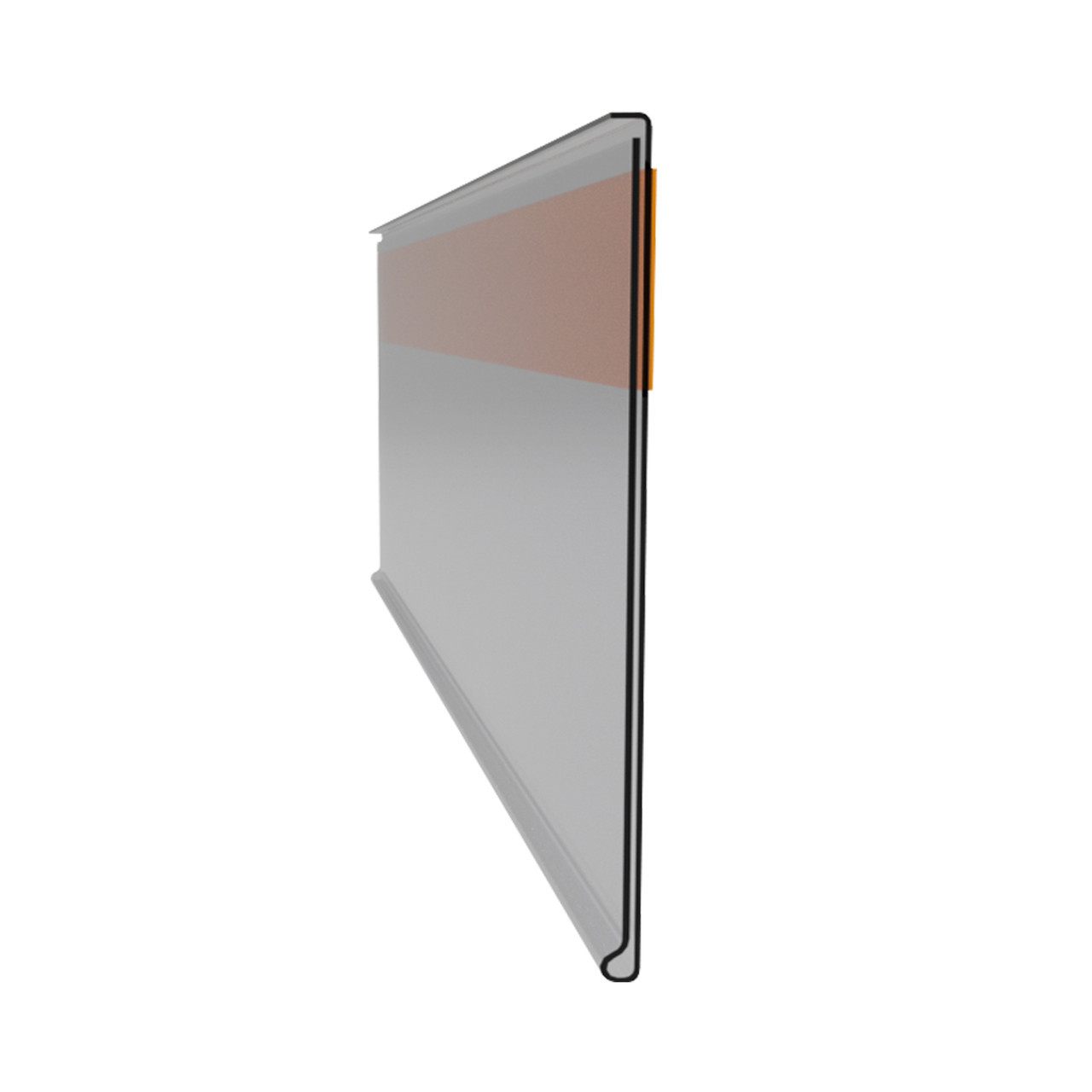
Adhesive data strips carry a self-adhesive tape along the back and attach directly to the shelf edge, no existing channel or profile required. That’s what makes them the default choice for shelving that wasn’t built with a data strip profile in mind: melamine, timber, cardboard, or older gondola runs.
The trade-off is permanence. Once applied, an adhesive strip isn’t designed to come off cleanly. Removing one to reposition it risks pulling paint or laminate with it, and a fresh strip usually needs to go somewhere new rather than back in the same spot.
That makes adhesive strips the right specification for fixtures that won’t move once installed: long-run grocery and convenience shelving, FSDU builds, permanent POS displays, and any project where the pricing or promotional inserts change but the fixture itself doesn’t. Harrison’s adhesive data strip range covers this ground, cut to order in a range of tape and ticket heights.

Clip-On Data Strips: Where They Work Best
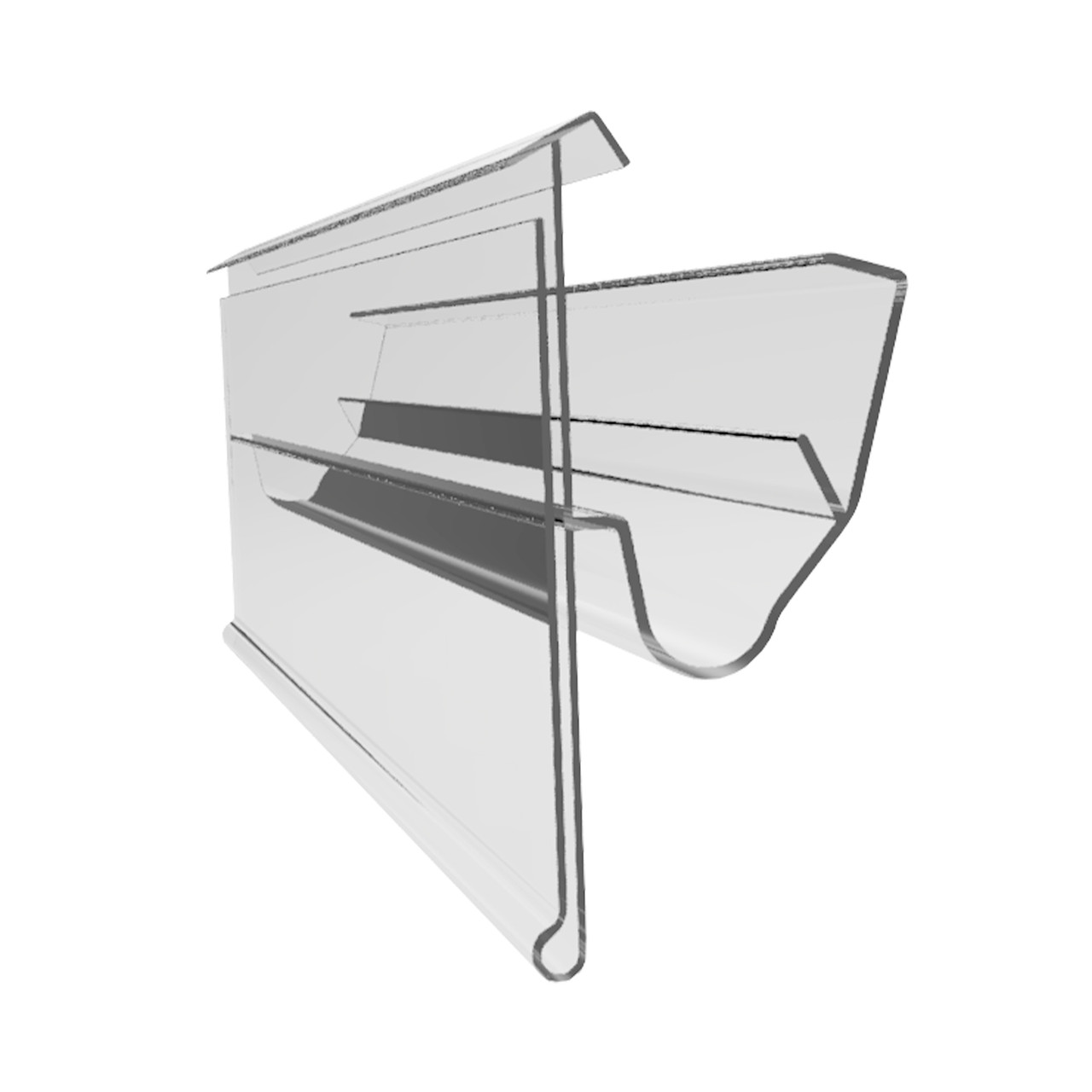
Clip-on data strips attach mechanically to a shelf edge profile that’s designed to receive them, rather than sticking to the surface. Once in place, they unclip by hand and can be moved, reused or removed entirely without leaving residue behind.
The trade-off runs the other way from adhesive. Clip-on strips need a compatible profile already fitted to the shelving. Order clip-on strips for shelving that doesn’t have one, and there’s nothing for them to attach to.
Where clip-on comes into its own is anywhere the layout changes more than once. Promotional bays, seasonal resets, and rollouts across multiple shelving formats all benefit from a fixing method that can be lifted and refitted as often as the retailer wants, without ordering a fresh strip every time. See Harrison’s clip-on data strip range for available profiles.

Magnetic Data Strips: Where They Work Best
Magnetic data strips use a magnetic tape back instead of adhesive or a mechanical clip. Pressed onto a metal shelf edge, they hold securely, then lift off cleanly whenever the layout needs to change, with no adhesive residue and no compatible profile to fit first.
The condition that governs magnetic strips is the shelving material itself. They hold fast on metal shelf edges, but the magnetic back has nothing to grip on timber, laminate or plastic shelving, where adhesive or clip-on remains the only workable option.
That narrow requirement is also what makes them useful. Warehouse and stockroom racking, metal gondola shelving in promotional bays, and any environment where the layout gets reset often are all good candidates, particularly where drilling or repeated adhesive fixing would be impractical. Harrison’s magnetic data strip range is supplied as a cut-to-order service.


Adhesive vs. Clip-On vs. Magnetic: A Decision Framework
Set the three side by side and the decision comes down to two questions: what is the shelving made of, and how often will the display need to change?
| Fixing Method | Attaches To | Reset Frequency Suited To | Typical Application |
|---|---|---|---|
| Adhesive | Any shelf edge (melamine, timber, cardboard, metal) | Low, permanent or semi-permanent | Long-run grocery/convenience, FSDU, permanent POS |
| Clip-On | Shelf edge with a compatible profile fitted | Moderate to high, repeat resets | Promotional bays, seasonal resets, multi-format rollouts |
| Magnetic | Metal shelf edges only | High, frequent repositioning | Warehouse/stockroom racking, metal gondola promotional bays |
Single permanent store fit
No plans to change the layout: adhesive is usually the simplest specification, since there’s no need to pay for repositioning you won’t use.
Multi-store rollout across mixed shelving estates
Expect to specify more than one fixing method in the same order, matched shelf by shelf rather than picked once for the whole rollout.
High-frequency promotional resets on metal shelving
Magnetic strips remove the labour of stripping and refitting adhesive at every reset. Clip-on is the fallback wherever the shelving isn’t metal.
Cost and Sourcing Considerations
None of the three fixing methods carries a fixed cost premium over the others. What drives cost and lead time is largely the same across all three: whether the strip is supplied cut to order or as a standard length, the material specified, and the order volume.
Cut-to-order strips suit irregular or older shelving where standard lengths won’t fit cleanly, but they typically take longer to produce than stock lengths pulled from a standard run. Material matters too. PET strips cost more to produce than standard PVC, but hold up better where recyclability is part of the specification.
For clip-on and magnetic orders specifically, confirm the shelf profile or shelving material before ordering rather than after. A cut-to-order run matched to the wrong profile is a more expensive problem to fix than the small delay of checking first. For volume orders, request a trade quote rather than working from a standard list price, since Harrison prices trade orders against the full specification rather than a fixed per-unit rate.
Can You Mix Fixing Methods Across One Store or Rollout?
Yes. Mixing adhesive, clip-on and magnetic data strips within the same store or rollout is common, and often necessary wherever the shelving itself is mixed. Each fixing method is specified against the shelving it sits on, not against the store as a whole.
In practice, that usually looks like:
Adhesive on fixed, permanent bays
Where the fixture won’t move and the shelving isn’t set up for clip-on or magnetic strips.
Clip-on on the main grocery or convenience run
Where a compatible profile is already fitted and resets happen periodically.
Magnetic on metal stockroom or warehouse racking
Where the layout changes often and the shelving is metal.
Specify against the shelving in front of you, shelf by shelf, rather than picking one fixing method for an entire estate.
Get the Fixing Method Right Before You Order
The decision between adhesive, clip-on and magnetic comes down to what the shelving is made of and how often the display gets reset, not personal preference or habit. Answer those two questions before you specify, and the rest of the order, size, material, quantity, falls into place.
If you’re planning a rollout with mixed shelving, request a trade quote and we’ll help match the fixing method to each shelving type in the estate.
For sizing, material and compatibility detail, see our Shelf Edge Data Strips practical guide and our Data Strips Buying Guide, and if ESL migration is part of the plan, our guide for printers and shopfitters.