
Ask three suppliers for the "same" display part and you may get three different names back. One calls it a corr-a-clip, another a display clip, a third a merchandising clip. Suddenly a straightforward spec conversation turns into a game of guesswork.
If you work in shopfitting, POS manufacturing or print management, you already know the parts. What's harder is knowing they're called the same thing every time you order, brief a colleague, or compare a quote. This glossary brings the most common POS display components together in one place, in plain English, so you can spec with confidence and stop Googling term-by-term.
1. What Are POS Display Components?
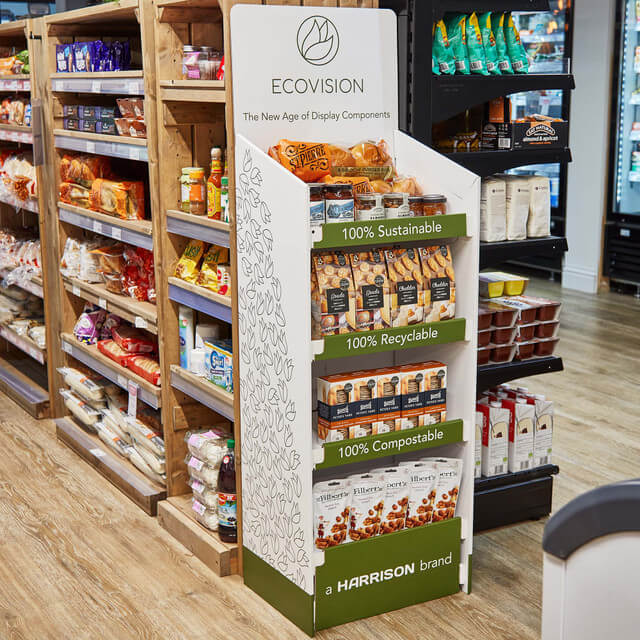
POS (point of sale) display components are the individual parts (hooks, clips, holders, mounts, strips and fasteners) used to build, assemble or dress retail display units and fixtures. They're the building blocks behind everything from a single shelf-edge strip to a full free-standing display unit (FSDU).
It helps to separate two things that often get talked about interchangeably:
- Display component: an individual part (a hook, a clip, a mount) that does one specific job.
- Display unit (such as an FSDU): the finished structure those components are used to build, fix, or finish.
Trade buyers typically source components separately from finished units, whether that's to build displays in-house, replenish stock across multiple retail sites, or keep a consistent parts inventory across several customer programmes. Buying components directly, rather than always through a finished unit, gives manufacturers and shopfitters more control over spec, cost and lead time.
2. The Main Categories of POS Display Components
Most components fall into one of three broad groups. Thinking in categories rather than individual part names makes it much easier to brief a project or scope a quote.
Structural components
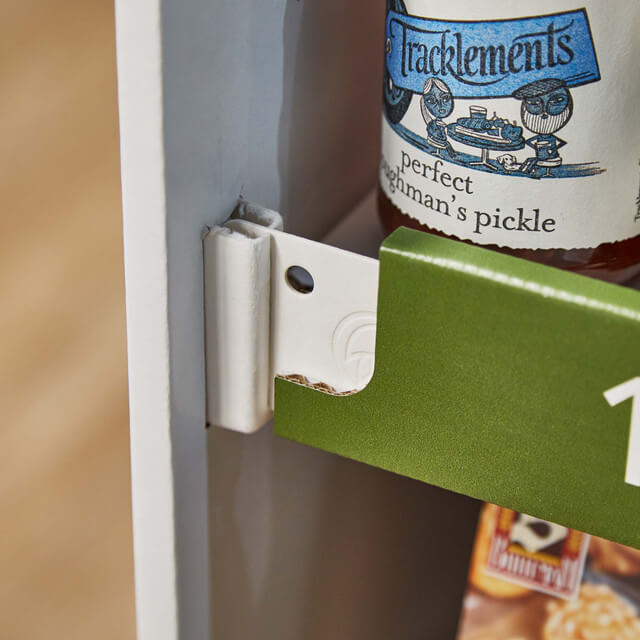
FSDU frames, corr-a-clips, rivets, fasteners and display pockets fall into this category. They're what physically hold a display together, and they do the heavy lifting: how sturdy, stackable and durable a unit ends up being usually comes down to these parts.
Merchandising components
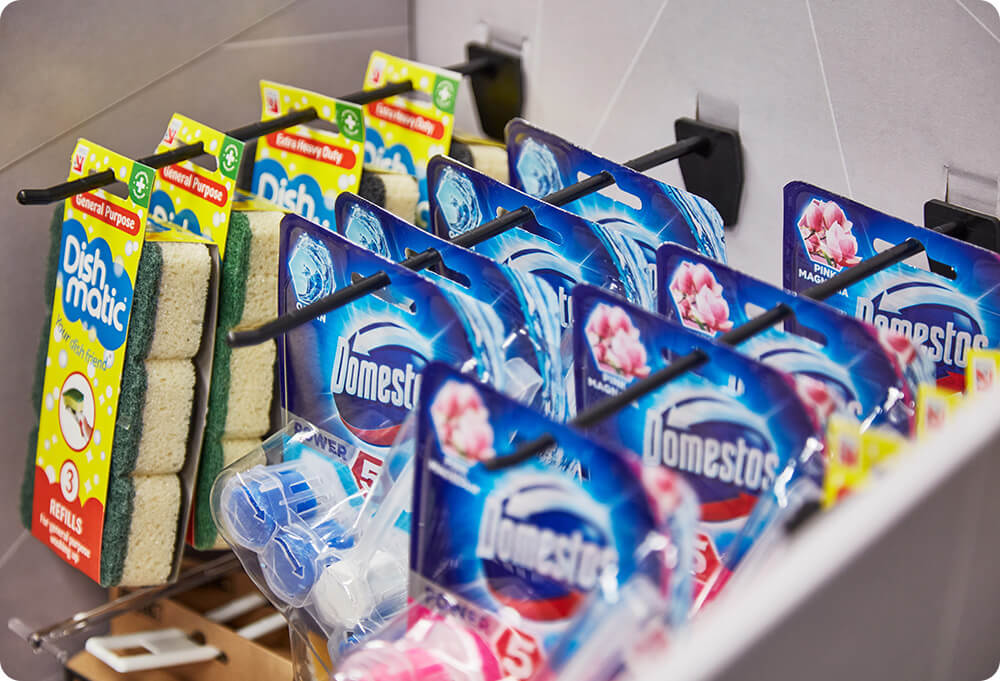
This group includes display hooks (slatwall, pegboard, cliphead), shelf-edge accessories and data strips, the parts that actually present product to the shopper. They also tend to be the highest-volume items in any retail rollout, reordered more often than almost anything else on a parts list.
Signage and communication components
Snap frames, sign holders, poster holders and banner hangers carry the pricing, promotional or wayfinding message. They're often the last thing added to a display, but get the wrong one and it's usually the first thing a shopper notices.
A well-specified display usually draws on all three categories, which is exactly why having one shared vocabulary across procurement, production and design teams saves so much time.

3. A–Z Glossary of Common POS Display Components
Here's a working reference for the terms you're most likely to come across when sourcing or specifying POS components.
- Banner Hanger: A fixing used to suspend banners, posters or signage from ceilings, gondola ends or fixtures, usually with a rotating or swivel head.
- Cliphead Hook: A display hook with a spring-loaded clip at the base, designed for quick, tool-free fitting to slatwall or panel fixtures.
- Corr-A-Clip: A small plastic or metal clip used to join corrugated cardboard panels together, most commonly during FSDU assembly.
- Data Strip: A plastic or metal strip fitted to the shelf edge to hold pricing or promotional labels; available in clip-on or adhesive-backed formats.
- Display Pocket: A clear plastic sleeve or pocket fixed to a display or shelf edge, used to hold leaflets, tickets or promotional cards.
- FSDU (Free-Standing Display Unit): A standalone retail display, typically made from corrugated card, used to merchandise product away from the main shelf run.
- Gripper: A small plastic component that holds product in place on a shelf or hook, preventing it from sliding or being knocked out of position.
- Pegboard Hook: A display hook designed to fit into the pre-drilled holes of a pegboard fixture, commonly used for lightweight, hanging product.
- Poster Holder: A rigid or semi-rigid frame used to display posters or printed graphics, often wall-mounted or freestanding.
- Security Lanyard: A retractable cord or cable used to tether high-value product to a display or fixture, allowing shoppers to handle it without removing it.
- Shelf Talker: A small sign or label that projects from the shelf edge to draw attention to a specific product or promotion.
- Slatwall Hook: A hook designed to slot into the horizontal grooves of a slatwall panel, widely used in fashion and general merchandise retail.
- Snap Frame: A poster or signage frame with a hinged profile that "snaps" open to allow graphics to be inserted or changed quickly.
- Stand-Off Mount: A fixing that holds signage away from a wall or surface, creating a raised, dimensional finish.
- Suction Cup Fixing: A fixing used to attach lightweight signage or components to glass or smooth, non-porous surfaces without drilling.
- Wobbler: A small sign attached to a shelf or display via a flexible strip, so it moves slightly to catch a shopper's attention.
Where a term links to a fuller buying guide (such as FSDU components), it's worth following that through before you spec at volume. Take a look at our FSDU Components Buying Guide for a closer look at assembly parts and specification.
4. Why Terminology Matters When Sourcing Components
It's easy to treat naming as a minor detail, but at rollout scale it rarely is. When a supplier, an internal ops team and a client all use different names for the same part, small ambiguities turn into real costs:
- Spec errors: the wrong hook, clip or mount arrives because a generic term was interpreted differently by each party.
- Reordering and delays: quotes have to be re-issued once the correct part is identified, pushing back production schedules.
- Wasted stock: components ordered against the wrong description sit unused, tying up budget and warehouse space.
A shared glossary, used consistently across procurement, production and design, removes a surprising amount of friction from quoting and ordering. It's a small operational habit that pays off every time a new project brief goes out.
5. Common Questions About POS Display Components
What's the difference between POS and POSM?
POS (point of sale) refers to the location and activity of a sale, while POSM (point of sale materials) refers specifically to the physical materials (displays, signage and components) used at that location. In practice, the terms are often used interchangeably in the trade.
Are POS display components reusable or single-use?
It depends on the material and the campaign. Corrugated card components are usually designed for a single promotional cycle, while plastic and metal components (hooks, mounts, frames) are typically built for repeated, long-term use across multiple campaigns.
What materials are POS display components typically made from?
Most components are made from plastic (ABS, acrylic or PVC), metal (steel or aluminium), or corrugated card. The right material depends on the load the component needs to bear, how long it needs to last, and the finish the display requires.
Do POS components need to be ordered from the same supplier as the display unit?
No. Many trade buyers source components separately from a specialist supplier, either to build units in-house, standardise parts across several display types, or maintain a consistent inventory across multiple retail programmes.
Sourcing POS Display Components the Easy Way
Getting the terminology right is the first step to sourcing correctly. The parts themselves are only useful once everyone involved is describing them the same way. From structural components through to merchandising and signage parts, Harrison Products stocks the full range covered in this glossary, ready to browse or quote .
Not sure exactly which component you need? That's what we're here for. Get in touch and we'll help you find the right part.