
Most fit-out delays have nothing to do with the shelving, the signage, or the display units themselves. They come down to a box of shelf edge clips that never got ordered, or a pack of cable kit fixings that ran out on day two of the install. The big components get specified early and arrive on schedule. The small ones get treated as an afterthought, and that is usually where a project starts to slip.
A shopfitting supplies checklist exists to close that gap. It will not replace a proper fit-out specification, but it gives you a way of catching what falls between ordering the fixtures and actually installing them.
What Counts as Shopfitting Supplies, and Why a Checklist Matters
Shopfitting supplies are the components that hold a retail fit-out together, rather than the fixtures themselves. Think shelf edge strips, display hooks, signage grippers, and the fixings that attach everything to a wall, shelf, or fixture. They rarely appear on a floor plan, but a fit-out cannot be completed without them.
For a single store, missing a component category is an inconvenience. A delivery gets split, or someone makes an emergency trip to source screws locally. For a multi-site rollout, the same gap multiplies across every store on the schedule, and a missing box of fixings in one location can hold up a whole phase of installs.
This checklist works through five categories worth confirming before a fit-out starts: shelf edge and shelf management, display hooks and merchandising fixtures, signage and display components, fixings and fasteners, and how you are sourcing all of it. Go through them in order and you have a reasonable chance of catching a gap before it becomes a site problem.
Shelf Edge and Shelf Management Components
Shelf edge is usually the first thing a customer sees at eye level, so it tends to get specified properly. What gets missed is matching the shelf edge components to the actual shelving profile on site.
Data strips carry pricing and promotional information along the shelf edge, and they come in adhesive and clip-on versions. Adhesive strips suit fixed layouts that do not change often. Clip-on strips suit stores that reset planograms regularly, since they can be swapped without leaving residue on the shelf. Get the profile wrong and the strip either will not clip on, or will not stay put.
Shelf barkers and ticket holders sit alongside data strips for promotional call-outs, and shelf talkers do a similar job where you need something that projects out from the shelf edge to catch attention.
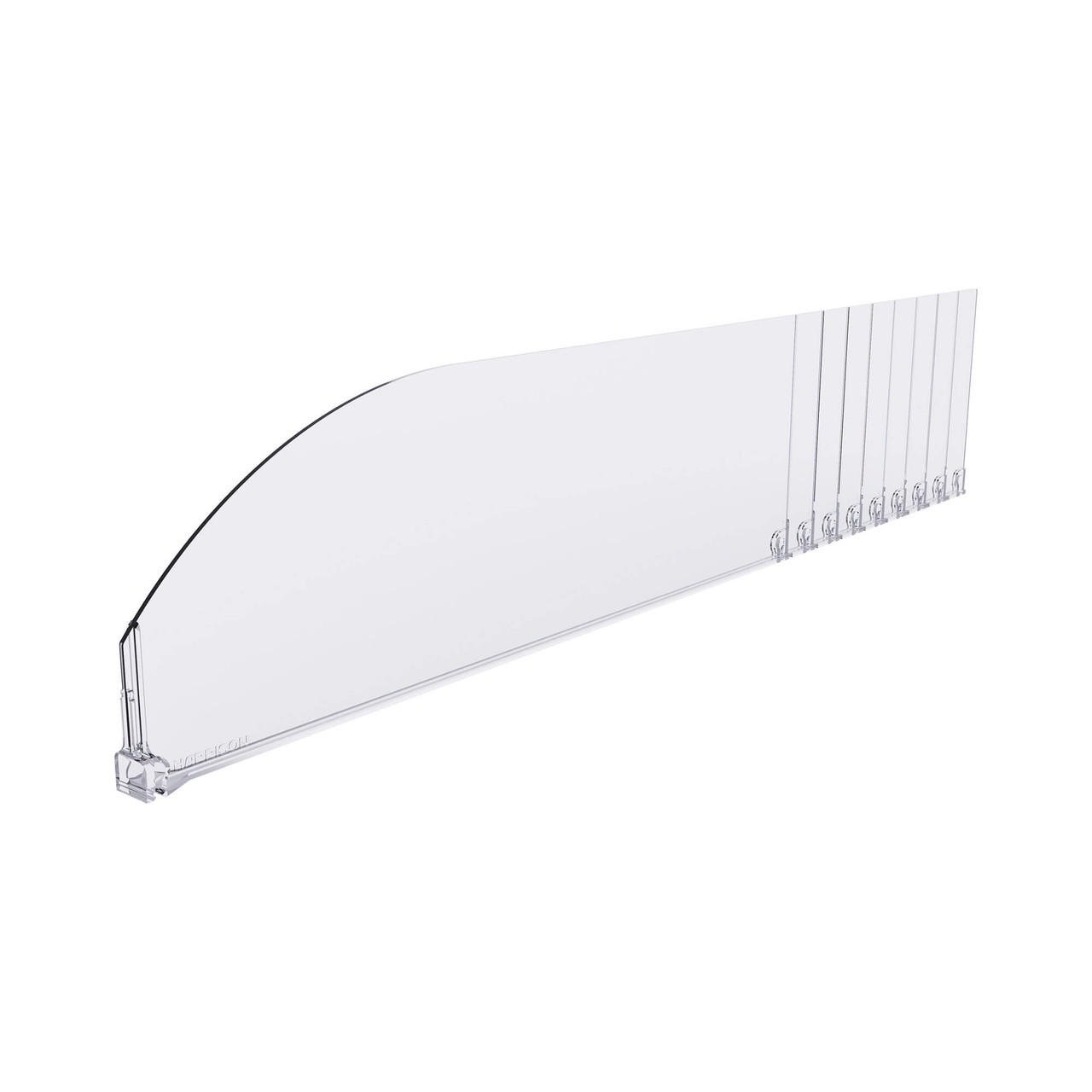
Behind the scenes, shelf risers, dividers and T-rails keep stock faced up and stop products sliding together, which matters more than it sounds for anything that is not a rigid box.
Before ordering, check the shelf edge profile depth and thickness against the component specification. It is a five-minute check that avoids a returned pallet of the wrong clip type.
Browse the full range on our Shelf Edge and Shelf Management page for sizes and compatibility across common shelving systems.

Display Hooks and Merchandising Fixtures
Display hooks are one of the few shopfitting components where the wrong choice is visible to a customer the same day it is installed, usually because a product has fallen off it.
Slatwall and pegboard hooks need to match the panel spacing and slot dimensions of the fixture, not just the general fixture type. Metal hooks tend to hold up better for heavier or high-turnover stock, while plastic hooks are lighter and cheaper for lower-weight display. If you are specifying hooks for a project and need the detail on which type suits which application, our Types of Retail Display Hooks post covers plastic, metal, slatwall, pegboard and cliphead options in more depth.
Beyond hooks, wire dump bins are worth including on the checklist for any project with impulse or clearance lines. They are straightforward to install but easy to forget when the focus is on the main fixture run.
Clip strips extend merchandising space vertically on gondola ends or alongside existing shelving, and they are a low-cost way to add facings without reworking a planogram.
Cross-check hook and bin quantities against the actual fixture count on site, not the fixture count on the drawing. Fit-outs regularly end up with more, or fewer, bays than the original plan, and merchandising fixtures need to track that number.
See the current range across Retail Display Hooks, Slatwall Display Hooks, Pegboard Display Hooks and Wire Dump Bins.


Signage and Display Components for the Fit-Out
Signage tends to get specified as artwork and frames, with the fixing components treated as an afterthought. That is a mistake, because the fixing method usually determines how long the signage stays up, and how much damage it does when it comes down.
For overhead signage, poster grippers, cable hanging kits and ceiling clamps do the actual work of suspending a poster or banner from a ceiling grid or track. We have covered the differences between these in detail in Ceiling Hanging Signage: Poster Grippers, Cable Kits and Clamps Explained, including which option suits a permanent installation versus a promotional campaign that needs regular changeovers.
At floor and counter level, snap frames and sign holders give a more controlled way to display printed material, and they are easier to update than fixed graphics when messaging changes between campaigns. Aisle fin holders and banner hangers extend the same principle to gondola ends and aisle signage.
The mistake worth avoiding here is treating signage fixings as generic. A cable kit rated for a lightweight poster will not necessarily hold a heavier banner, and the wrong ceiling clamp for the grid type on site means a return visit to swap it out.
Browse Shelf Talkers and Banner Hangers and Aisle Fin Holders for the shelf-level and aisle-level signage components most often missing from a first-pass order.
Fixings, Fasteners and the Small Components That Get Missed
This is the category that causes the most last-minute delays, and it is almost always because these components get estimated rather than counted.
Screws and rivets attach the majority of shopfitting fixtures to walls, shelving and display units, and running short partway through an install means the work stops while someone sources more locally, usually at retail price rather than trade price. Hook and loop tape, magnetic tape and glue dots do similar attachment jobs where a permanent fixing is not appropriate, particularly for signage and POS material that needs to come down cleanly.
Double-sided tape is worth a specific mention, because it is frequently substituted for glue dots, or the other way round, without checking whether the surface and weight actually suit the adhesive type. Get it wrong and either the fixing fails, or it takes the paint off the wall when removed.
The practical fix is simple. Order fixings against the actual fixture count for the project, with a reasonable margin for wastage, rather than a round-number estimate. A shopfitter who keeps a stock of common fixings (screws, rivets, glue dots and tape) in standard quantities rarely gets caught out by this category.
What Should Be on a Shopfitting Supplies Checklist?
A shopfitting supplies checklist should cover five component categories: shelf edge and shelf management, display hooks and merchandising fixtures, signage and display components, fixings and fasteners, and packaging components where the project includes point-of-purchase packaging.
- Shelf edge and shelf management: data strips, shelf barkers, ticket holders, risers and dividers.
- Display hooks and merchandising fixtures: display hooks, wire dump bins, clip strips.
- Signage and display: poster grippers, cable hanging kits, ceiling clamps, snap frames, sign holders.
- Fixings and fasteners: screws, rivets, hook and loop tape, magnetic tape, glue dots, double-sided tape.
- Packaging components (where relevant): handles, box locks, magnets.
Confirm quantities against the actual fixture count on site rather than the original drawing, and check any custom hook or clip specification against the profile it needs to fit before ordering.
Cost and Sourcing Considerations for a Shopfitting Fit-Out
Because shopfitting supplies are sourced against a project brief rather than sold off a fixed price list, the cost impact of a fit-out has more to do with how the sourcing is managed than the unit price of any individual component.
Splitting an order across several suppliers to chase the lowest price on each category usually costs more in practice, once you factor in extra delivery charges, several lead times to track, and the administrative time spent chasing multiple order confirmations instead of one. Consolidating shelf edge, merchandising, signage and fixings with a single supplier tends to compress the timeline more than it compresses the invoice, and that matters more on a fast-track rollout than a modest saving per unit.
Before placing an order, check stock availability against your install date, any minimum order quantities on the components you need, and whether a trade account would speed up repeat ordering for future projects. For businesses running multiple fit-outs a year, a trade account also gives visibility over stock and lead times without needing a quote for every order.
Get a quote for your project’s component list, or set up a trade account if you are managing shopfitting supplies across multiple sites.
Final Thoughts
A shopfitting supplies checklist is not really about the components themselves. It is about knowing what to order, in what quantity, and from how many suppliers, before the install date is fixed and the schedule stops being flexible.
Work through the five categories in this checklist against your specific fit-out (shelf edge, merchandising fixtures, signage, fixings and, where relevant, packaging) and check quantities against the actual site rather than the original drawing. It is a small amount of extra time that can save a stalled install later.
Browse our full range of shopfitting supplies, or get in touch with our team for a quote if you are planning a fit-out or multi-site rollout. If you order shopfitting components regularly, ask about setting up a trade account for faster repeat ordering.