A failing hook rarely looks like a problem worth worrying about, until it happens across forty stores in the same week. Stock ends up on the floor instead of the shelf. Someone in operations fields a call they shouldn’t have to take. A reorder that should have taken five minutes turns into a scramble. Most of this comes down to one decision made early: picking the wrong type of display hook for the fixture, the load, and the environment it has to survive.
This guide forms part of our complete Merchandising Display Hooks Buying Guide. It compares the five hook types you’re most likely to specify, plastic, metal, slatwall, pegboard and cliphead, so you can match hook to job without the trial and error.
Why Retail Display Hook Selection Matters
Display hooks look like a minor, low-cost component. In practice they carry real operational weight. Get the load rating wrong and a hook bends, snaps, or drops stock on the floor mid-rollout, which usually means a damaged fixture and an unplanned site visit to fix it. Get the fixture wrong and the hook simply won’t fit, which causes its own kind of delay, just earlier in the process.
Responsibility for this choice usually sits with whoever is closest to the fixture. That might be a purchasing coordinator ordering repeat stock, an operations manager specifying for a rollout, or a shopfitter building a fit-out from the ground up. Five hook types exist because five different problems need solving. None of them is simply a better version of another.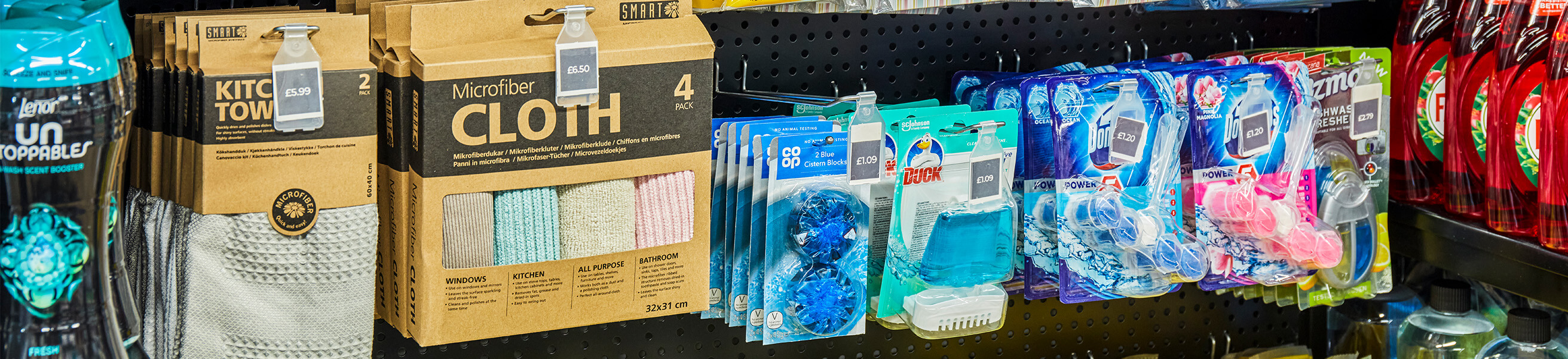
The Four Main Types of Retail Display Hooks
The main types of retail display hooks are slatwall, pegboard, cliphead, and FastStab (also known as QuickStab) These are defined by the fixture they’re built to mount onto. Which one is right for a job depends on how much weight it needs to hold and where it will be used.
- Slatwall hooks
Made to slot into slatwall panelling, sized to match the panel’s groove spacing. Slatwall display hooks are commonly used across fashion stores, and most retail environments.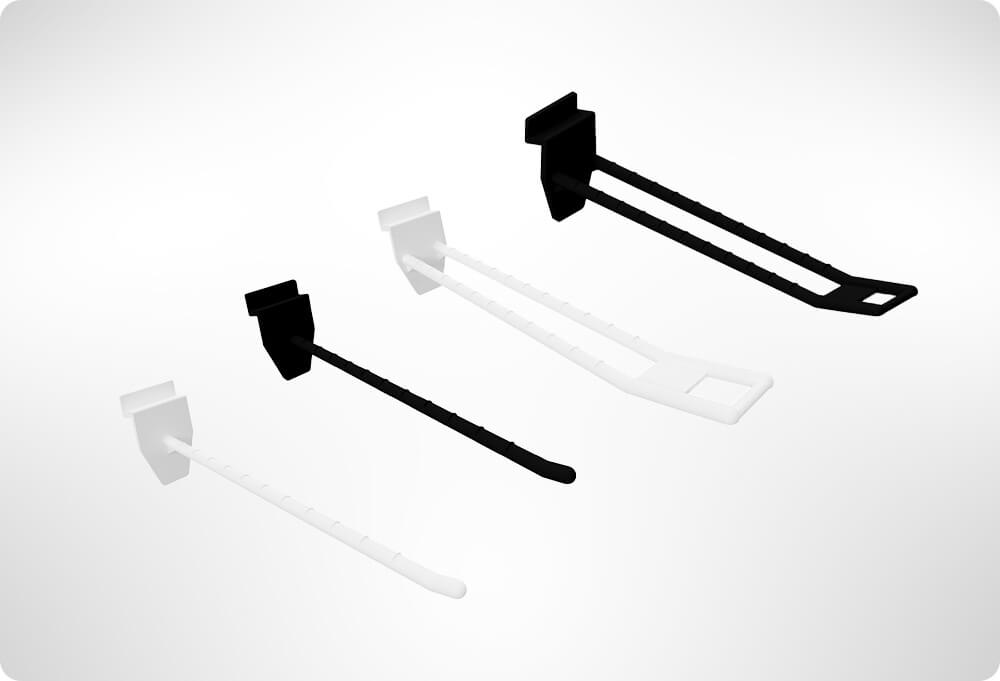
- Pegboard hooks
Made for perforated pegboard, sized to the board’s hole spacing. Pegboard display hooks allow for more configurable displays of product, and can accommodate heavy loads. Commonly used in DIY / Hardware, as well as homeware and general retail.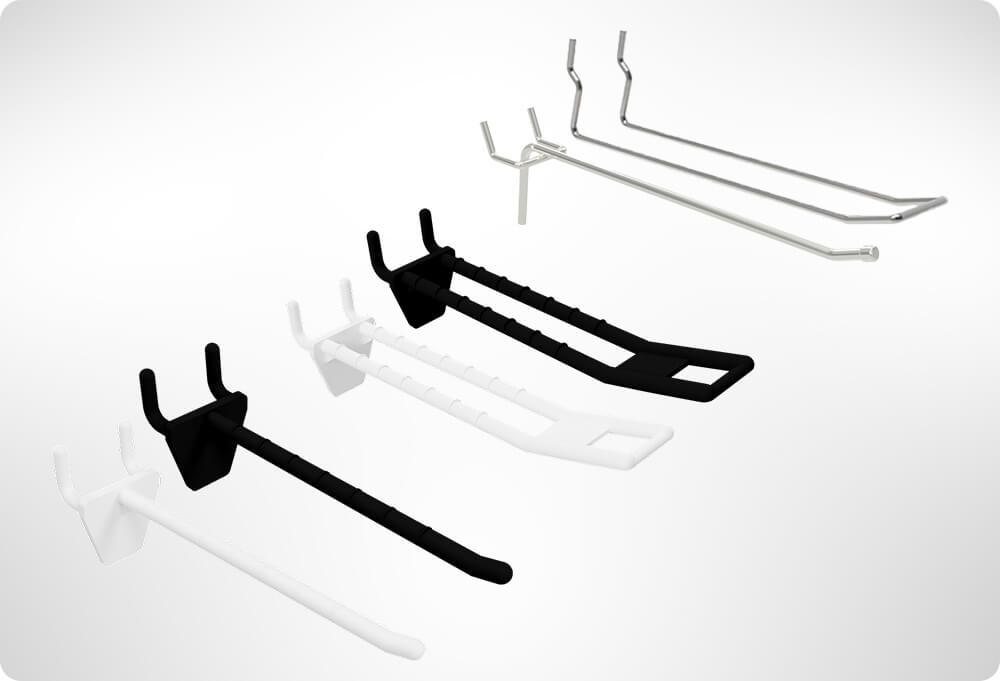
- Cliphead hooks
Features a specialized rear tension clip that fits directly onto slotted, or straight edges of display panels. This allows them to friction-grip straight onto the material without any tools or hardware. Cliphead display hooks are ideal for quick installations such as POS display materials like Free Standing Display Units (FSDUs)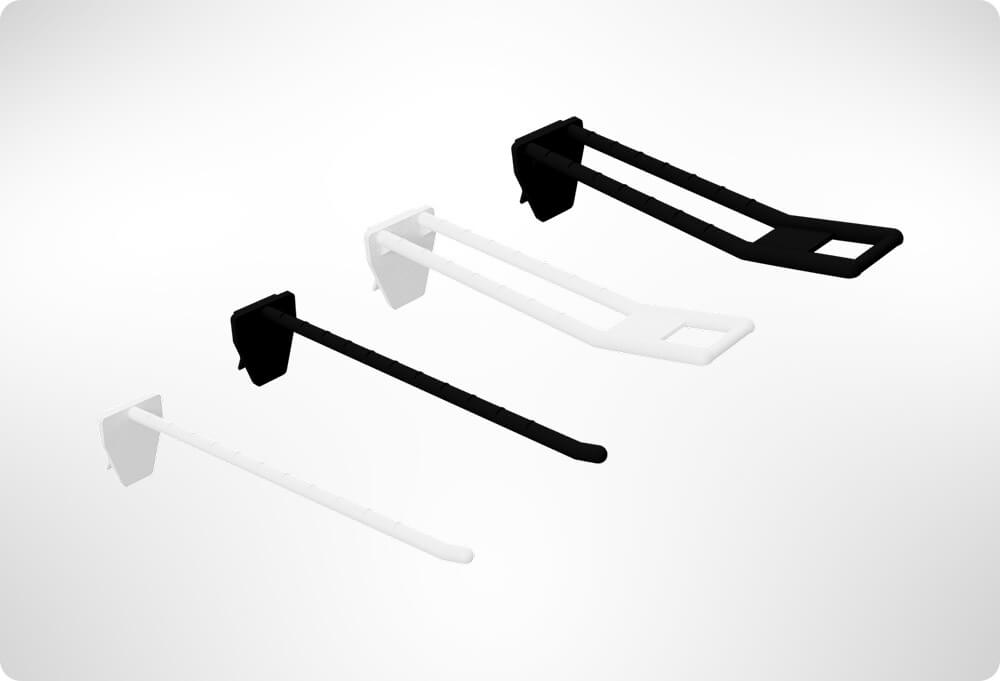
- Faststab hooks
Plastic merchandising hooks which feature rear spikes designed to push and lock directly into corrugated cardboard retail displays without requiring pre-punched holes or tools. Similar to Cliphead in terms of application benefits for quick and easy POS display installation.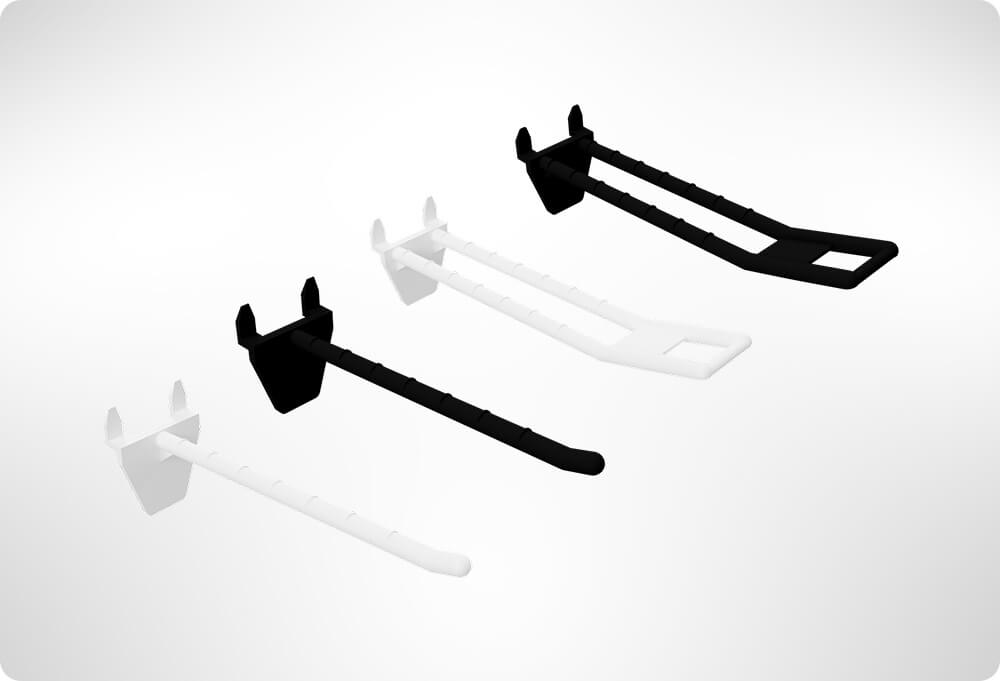
Feature-by-Feature Comparison
The table below lines up fixture compatibility, load and material for each type, since these are usually what decide a specification at volume.
| Hook Type | Fixture Compatibility | Typical Load Capacity | Material | Single or Double Prong | Common Environment |
|---|---|---|---|---|---|
| Slatwall | Slatwall panelling only | Light to heavy, application dependent | Available in plastic or metal. | Both | Fashion, electronics, specialist retail |
| Pegboard | Pegboard panelling only | Light to heavy, application dependent | Available in plastic or metal. | Both | Hardware, convenience, back-of-store |
| Cliphead | Free Standing Display Units (FSDUs) and Countertop Display Units (CDUs) | Light to medium | Available in plastic only | Both | Grocery, convenience |
| FastStab | Free Standing Display Units (FSDUs) and Countertop Display Units (CDUs) | Light to medium | Available in plastic only | Both | Grocery, convenience |
Typically, both slatwall and pegboard types are available as plastic display hooks and metal display hooks, such is their versaility due to their application method. For both types, metal display hooks can accommodate a greater load capacity (making them ideal for use configurable use in DIY hardware stores, for example)
Cliphead and FastStab hooks are better suited for FSDU displays, due to their quick and convenient application methods. They are also only available in plastic, due to weight being a bigger consideration for temporary POS displays.
Pricing Analysis
Plastic sits at the bottom of the price range, which is why it’s the default for standard, lower-load merchandising and routine replenishment. Metal costs more per unit, but it also lasts several times longer, so on fixtures that see heavy handling the real cost per use often ends up lower with metal, not plastic.
On a multi-site rollout, unit price matters less than consistency. A hook that needs replacing across forty stores within a year will cost more in labour and reorder admin than it ever saved on the unit price. When comparing quotes, look at minimum order quantities and lead times too. They affect the real landed cost just as much as the price per hook.
Pros and Cons of Each Type
Plastic is cheap, light, and comes in enough colours to match most merchandising schemes, but it has limits. Load capacity is modest, and hooks left in direct sun or near heat sources can turn brittle faster than expected.
Metal makes up for that. It holds more weight and lasts longer under regular handling, though it costs more to buy, and some finishes will corrode if the environment is damp or exposed to the elements.
Slatwall and pegboard hooks are defined by the fixture they slot into, which is exactly why they work well: built for a specific panel, they integrate cleanly once specified correctly and support plenty of merchandising configurations. The flip side is that a slatwall hook is useless on a pegboard fixture and vice versa, so getting the spec wrong is an expensive mistake to make at volume.
Which Hook Type Suits Which User?
If you’re a purchasing coordinator managing repeat stock, plastic and metal hooks are usually the easiest to reorder without going back to check the fixture, as long as the original specification is on file. What matters most here isn’t range, it’s having accurate product information and confirmed stock levels so ordering can stay self-serve.
Specifying for a rollout is a different job. Shopfitters and POS manufacturers need to match slatwall and pegboard hooks precisely to a fixture’s groove or hole spacing before ordering at volume. Get that wrong across a multi-store rollout and it’s an expensive thing to fix after the fact.
Recommendations
There isn’t a single best display hook. It depends on what you’re mounting to, how much weight it needs to hold, and where it will live day to day. Plastic and metal cover most standard merchandising jobs. Slatwall and pegboard are dictated by whatever fixture is already on the floor.
Ready to order? Browse our full range of Retail Display Hooks, or get in touch with our team for support specifying components for your next rollout.